⑧ Today's Drivers & Outlook
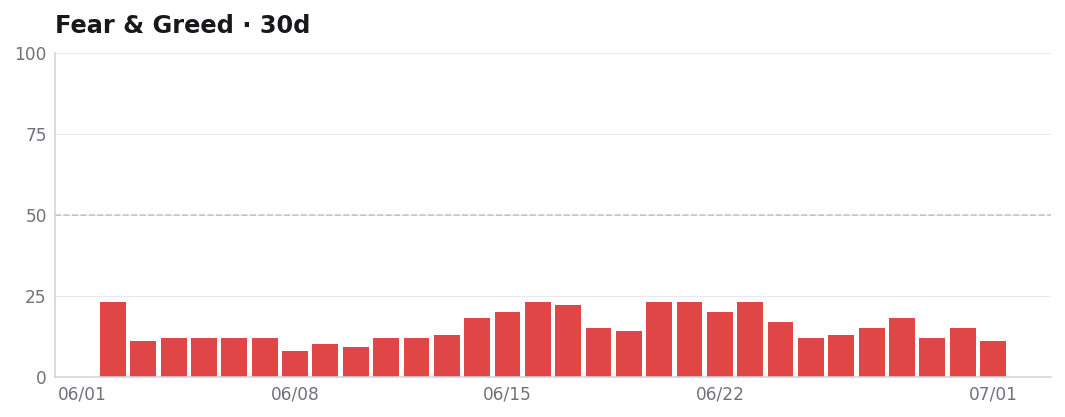
이번 하락은 매파 연준과 고유가가 크립토 약세를 직접 만든 장세다. 연준 추가 긴축 시사와 WTI $93.34 유지 → 인플레 재가속 우려 → DXY 102.57 강세 → BTC $82,120, ETH $2,467, SOL $106.40 하락으로 이어졌다. 알트가 더 약했던 이유는 금리와 달러 민감도가 더 높기 때문이다. S&P500 7,807과 나스닥 27,246이 보합인 반면 크립토만 더 밀린 점도 이를 뒷받침한다. 자금은 시장 밖보다 BTC로 숨었다. BTC 도미넌스는 59.26%로 올랐고 ETH 도미넌스는 10.83%에 머물렀다. 현물 수급은 약했다. BTC 현물 ETF는 10월 10일 +2,113만달러였지만 직전 이틀 유출을 못 메웠고, ETH 현물 ETF는 10월 들어 9거래일 연속 유출로 월간 -6.35억달러다. 파생도 조정을 키웠다. 거래량은 6,993억달러로 75.80% 급증했고 청산은 1.95억달러였다. 한국은 국고 3년 3.921%, 10년 4.306%, 달러-원 1,335.10원으로 완화됐지만 업비트·빗썸 거래대금은 2.5조원에 그쳐 글로벌 역풍을 못 뒤집었다. 다만 Strategy의 250 BTC 추가 매수와 총 848,250 BTC 보유, 스테이블코인 거래량 767.7억달러 증가는 하방 완충 신호다. 여기에 RLUSD 수탁, 크라켄 UAE 확장, MiCA 감독 강화는 중장기 제도권 기반을 넓힌다.
이번 주 핵심은 미국 물가와 연준 경로, 그리고 BTC $80,000 지지 여부다. DXY 102.57과 WTI $93.34가 유지되면 실질금리 부담과 ETF 유출 압력이 이어질 가능성이 크다. 그 경우 $80,000 이탈 → $76,000-78,000 조정 시나리오를 열어둬야 한다. 특히 ETH는 ETF 유출이 길어 상대 약세가 이어질 수 있고, 알트는 BTC 대비 언더퍼폼 가능성이 높다. 반대로 유가 진정과 매파 기대 완화가 나오면 $84,000 재돌파가 첫 신호다. 이후 $86,000-89,000 회복 시 $94,000 경로가 다시 열린다. 반등의 질은 ETF 일간 순유입 전환과 스테이블코인 거래량 유지가 확인해줄 것이다. 트레이더 관점에서는 지금은 BTC 중심 방어가 우선이다. 알트 비중과 레버리지는 낮추고, $80,000 지지 확인 전까지 현금 비중을 유지하는 편이 낫다. 다만 ETF 플로우가 개선되면 ETH와 수탁·스테이블코인 인프라 수혜 테마로 단계적 확장이 유효하다. 중기적으로는 기관 수탁과 규제 정비가 금리 완화 국면에서 가장 큰 멀티플 확장 재료가 될 전망이다.
This decline was a market in which a hawkish Fed and high oil prices directly drove crypto weakness. Expectations of further Fed tightening and WTI holding at $93.34 led to renewed concerns about reaccelerating inflation, which in turn supported the DXY at 102.57 and weighed on BTC at $82,120, ETH at $2,467, and SOL at $106.40. The reason altcoins were weaker was their higher sensitivity to interest rates and the dollar. The fact that the S&P 500 at 7,807 and the Nasdaq at 27,246 were flat while crypto alone sold off more also supports this view. Funds sought refuge in BTC rather than outside the market. BTC dominance rose to 59.26%, while ETH dominance remained at 10.83%. Spot supply-demand conditions were weak. BTC spot ETFs saw a net inflow of $21.13 million on October 10, but this was not enough to offset the outflows from the prior two days, and ETH spot ETFs posted nine consecutive sessions of outflows so far in October, bringing the monthly total to -$635 million. Derivatives also amplified the correction. Trading volume surged 75.80% to $699.3 billion, and liquidations totaled $195 million. In Korea, conditions eased with 3-year government bond yields at 3.921%, 10-year yields at 4.306%, and the dollar-won exchange rate at 1,335.10 won, but trading value on Upbit and Bithumb came to only 2.5 trillion won, failing to reverse the global headwind. Still, Strategy’s additional purchase of 250 BTC and its total holdings of 848,250 BTC, along with the increase in stablecoin transaction volume to $76.77 billion, are signs of downside buffering. In addition, RLUSD custody, Kraken’s expansion into the UAE, and tighter MiCA supervision are broadening the institutional foundation over the medium to long term.
This week’s key focus is U.S. inflation and the Fed path, as well as whether BTC can hold support at $80,000. If the DXY remains at 102.57 and WTI stays at $93.34, pressure from real rates and ETF outflows is likely to continue. In that case, traders should be prepared for a scenario in which $80,000 is broken and BTC corrects toward $76,000-$78,000. In particular, ETH could continue to underperform due to prolonged ETF outflows, and altcoins are likely to underperform BTC. Conversely, if oil prices stabilize and hawkish expectations ease, a reclaim of $84,000 would be the first signal. A subsequent recovery to $86,000-$89,000 would reopen the path toward $94,000. The quality of any rebound will be confirmed by a daily shift to net ETF inflows and sustained stablecoin transaction volume. From a trader’s perspective, BTC-centered defense should be the priority for now. It is preferable to reduce altcoin exposure and leverage, and maintain a higher cash position until BTC confirms support above $80,000. That said, if ETF flows improve, gradual rotation into ETH and themes benefiting from custody and stablecoin infrastructure would be valid. Medium term, institutional custody and regulatory clarity are likely to become the biggest drivers of multiple expansion in a lower-rate environment.
Šis kritimas buvo rinka, kurioje vanagiškas Fed ir aukštos naftos kainos tiesiogiai sukėlė kriptovaliutų silpnumą. Fed užuominos apie tolesnį griežtinimą ir WTI išlaikymas ties $93.34 lėmė infliacijos pakartotinio įsibėgėjimo baimę, o tai virto DXY stiprėjimu iki 102.57 ir BTC kritimu iki $82,120, ETH iki $2,467, SOL iki $106.40. Priežastis, kodėl altkoinai buvo dar silpnesni, yra ta, kad jie jautresni palūkanų normoms ir doleriui. Tai patvirtina ir tai, kad nors S&P500 7,807 ir Nasdaq 27,246 iš esmės išliko nepakitę, kriptovaliutos buvo nusmuktos labiau. Lėšos slėpėsi BTC, o ne traukėsi iš rinkos. BTC dominavimas pakilo iki 59.26%, o ETH dominavimas liko ties 10.83%. Spot paklausa buvo silpna. BTC spot ETF spalio 10 d. užfiksavo +2,113 mln. dolerių įplaukų, tačiau to nepakako kompensuoti ankstesnių dviejų dienų nutekėjimo, o ETH spot ETF spalio mėnesį jau 9 prekybos dienas iš eilės fiksuoja nutekėjimą, todėl mėnesio rezultatas siekia -6.35 mlrd. dolerių. Išvestinės priemonės taip pat padidino korekciją. Prekybos apimtis šoktelėjo 75.80% iki 699.3 mlrd. dolerių, o likvidavimai sudarė 195 mln. dolerių. Korėjoje iždo obligacijų 3 metų pajamingumas siekė 3.921%, 10 metų 4.306%, o dolerio ir vono kursas susilpnėjo iki 1,335.10 vono, tačiau Upbit ir Bithumb prekybos apyvarta tesiekė 2.5 trln. vonų ir nesugebėjo atsverti pasaulinio priešvėjo. Vis dėlto Strategy papildomai įsigyta 250 BTC ir bendras 848,250 BTC kiekis, taip pat iki 76.77 mlrd. dolerių išaugusi stablecoin prekybos apimtis yra signalai, švelninantys spaudimą žemyn. Be to, RLUSD saugojimas, Kraken plėtra JAE ir MiCA priežiūros griežtinimas ilgainiui plečia institucinio pagrindo ribas.
Šios savaitės esmė yra JAV kainų dinamika, Fed trajektorija ir BTC $80,000 palaikymo lygio išlaikymas. Jei DXY 102.57 ir WTI $93.34 išliks, tikėtina, kad realiųjų palūkanų našta ir ETF nutekėjimo spaudimas tęsis. Tokiu atveju reikia pasiruošti scenarijui, kuriame pramušamas $80,000 lygis ir korekcija tęsiasi iki $76,000-78,000. Ypač ETH gali toliau santykinai silpnėti dėl užsitęsusio ETF nutekėjimo, o altkoinai, tikėtina, ir toliau prastesni nei BTC. Priešingai, jei naftos kainos nusistovės ir vanagiški lūkesčiai susilpnės, pirmasis signalas bus $84,000 ribos susigrąžinimas. Vėliau, jei kaina atsigaus iki $86,000-89,000, vėl atsivers kelias į $94,000. Atšokimo kokybę patvirtins ETF dieninių grynųjų įplaukų perėjimas į teigiamą teritoriją ir stablecoin prekybos apimties išlaikymas. Prekiautojų požiūriu dabar prioritetas yra BTC pagrindu paremta gynyba. Altkoinų dalį ir svertą reikėtų mažinti, o iki $80,000 palaikymo patvirtinimo geriau palaikyti didesnę grynųjų pinigų dalį. Vis dėlto, jei ETF srautai pagerės, laipsniškas pozicijų didinimas į ETH ir saugojimo bei stablecoin infrastruktūros naudą gaunančias temas bus pagrįstas. Vidutiniu laikotarpiu institucinis saugojimas ir reguliacinis sutvarkymas, palankesnio palūkanų normų režimo sąlygomis, tikėtina, taps didžiausiu dauginio plėtros veiksniu.
Key Points
Wavebridge View
BTC 중심의 방어적 조정 국면이 1~6개월 이어질 가능성이 높다고 본다.
We judge that a defensive correction led by BTC is likely to persist for 1 to 6 months.
Manome, kad BTC centrinė gynybinė korekcijos fazė gali tęstis 1–6 mėnesius.